

Benign prostatic hyperplasia, or BPH, affects millions of men over 50. The prostate gradually enlarges, squeezing the urethra and making urination progressively more difficult. Weak stream, frequent trips to the bathroom, waking up multiple times at night, the feeling that your bladder never fully empties. For many men, medications like tamsulosin or finasteride provide adequate relief. But when pills stop working or the side effects become a problem, the question shifts to which procedure makes the most sense. Dr. Jon Lazare at Lazare Urology in Brooklyn offers both GreenLight Laser Therapy and UroLift, and the recommendation depends on the size of the prostate, the severity of symptoms, and what matters most to the individual patient.
These two procedures take fundamentally different approaches to the same problem, and understanding how they differ will help you have a more productive conversation with your urologist.
How GreenLight Laser Therapy Works
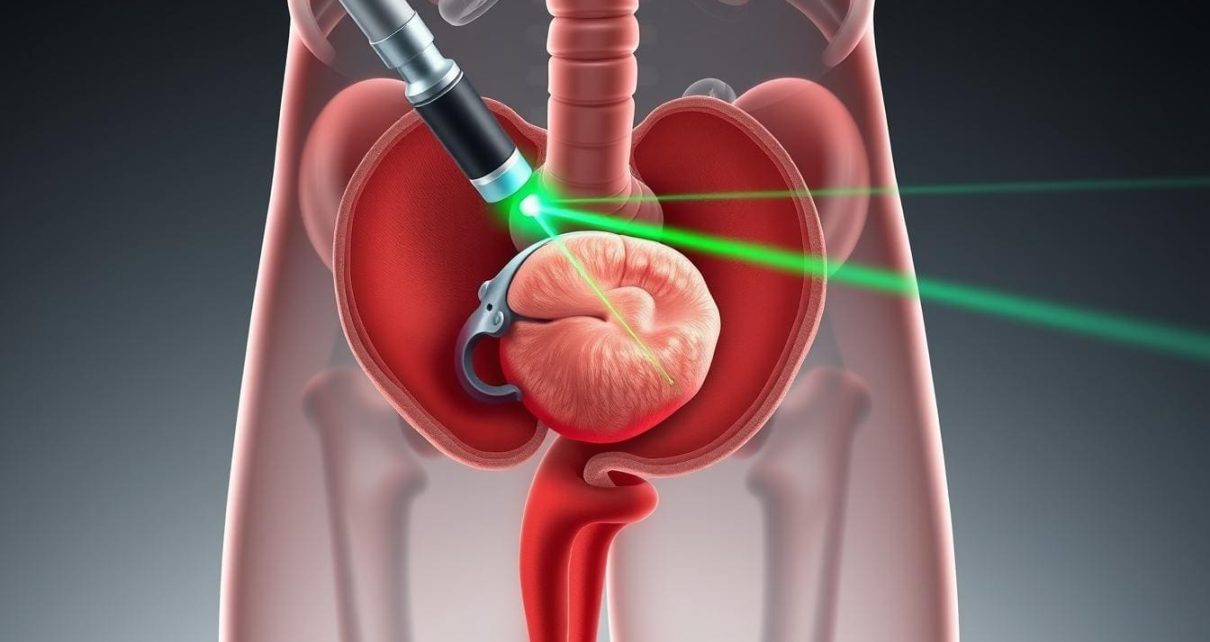
GreenLight Laser Therapy, sometimes referred to as photoselective vaporization of the prostate (PVP), uses a high-powered laser to vaporize the excess prostate tissue that’s blocking urine flow. A thin fiber is passed through a cystoscope into the urethra, and the laser energy is directed at the obstructing tissue. The tissue is vaporized on contact, essentially carving out a wider channel through the prostate so urine can flow freely.
The procedure is performed under general anesthesia or spinal anesthesia and typically takes between 30 and 90 minutes depending on how much tissue needs to be removed. A catheter is placed afterward to allow the bladder to drain while the treated area heals, usually for one to three days. Most men go home the same day.
GreenLight is functionally similar to a traditional TURP (transurethral resection of the prostate), which has been the gold standard surgical treatment for BPH for decades. The key difference is that the laser vaporizes tissue rather than cutting and cauterizing it, which results in significantly less bleeding. This makes GreenLight a strong option for men who take blood thinners and can’t safely discontinue them for surgery.
How UroLift Works
UroLift takes a completely different approach. Rather than removing or destroying prostate tissue, it uses small permanent implants to physically hold the enlarged lobes of the prostate apart, like pulling back curtains to open a window. Each implant consists of a small metallic tab on the outside of the prostate capsule connected by a suture to a tab on the urethral surface. When deployed, the implant compresses the obstructing tissue and widens the urethral channel.
The procedure is minimally invasive and can be performed under local anesthesia, sedation, or general anesthesia. It takes about 20 to 30 minutes, and most patients go home the same day without a catheter. That last point is significant for many men. Avoiding a post-procedure catheter means one less uncomfortable element in the recovery process.
UroLift received FDA clearance in 2013 and has been supported by clinical data through the L.I.F.T. (Luminal Improvement Following Prostatic Tissue) study, which tracked outcomes over five years.
Who Is the Ideal Candidate for Each?
Prostate size is the primary factor that separates candidates for the two procedures.
UroLift works best for men with mild to moderately enlarged prostates, generally those with a prostate volume between 30 and 80 cubic centimeters. It’s particularly well suited for men whose obstruction comes from lateral lobe enlargement, where the two side lobes of the prostate are pushing inward. Men with a significant median lobe (the lobe that can grow upward into the bladder) were historically not ideal UroLift candidates, though a newer version of the device has expanded eligibility to include some median lobe anatomy. Dr. Lazare evaluates this during the consultation with imaging and cystoscopy.
GreenLight Laser Therapy handles larger prostates more effectively. Men with prostate volumes above 80cc, or those with significant median lobe involvement, typically get better results from tissue removal than from mechanical retraction. GreenLight is also the better choice when the degree of obstruction is severe, when urinary retention has occurred (the inability to urinate at all), or when there’s a need to obtain tissue for pathological examination since the vaporized tissue from GreenLight can sometimes be biopsied while UroLift implants don’t involve tissue removal.
Recovery Comparison
This is where UroLift has a notable advantage. Because no tissue is cut, burned, or removed, recovery is faster and involves less discomfort. Most men experience mild urinary burning and urgency for a few days, and some notice a small amount of blood in the urine. The majority return to normal activity within a few days, and many resume light work within 24 to 48 hours.
GreenLight recovery takes a bit longer. The catheter stays in place for one to three days, and urinary irritation, frequency, and urgency are common for the first two to four weeks as the treated area heals. Some men experience temporary retrograde ejaculation (semen going into the bladder instead of out through the penis during orgasm) after GreenLight, which is painless and harmless but can be an unwelcome surprise if it wasn’t discussed beforehand. Most patients feel significantly improved within four to six weeks, with full recovery by three months.
Long-Term Outcomes and Durability
This is where GreenLight holds the stronger hand. Because it physically removes the obstructing tissue, the results tend to be more durable over time. Studies tracking GreenLight outcomes show sustained symptom improvement at five and ten years, with retreatment rates similar to traditional TURP, generally under 10% at ten years.
UroLift outcomes are strong in the short and medium term. The L.I.F.T. study showed meaningful symptom improvement at five years, with about 14% of patients requiring additional treatment during that period. Because the prostate tissue is still present and can continue to grow, there’s a higher likelihood of needing a secondary procedure compared to tissue-removal approaches. For some men, that trade-off is acceptable given UroLift’s faster recovery and lower side-effect profile. For others, particularly those with more significant enlargement, the longer-lasting relief from GreenLight is worth the slightly more involved recovery.
Sexual Function
One of the biggest reasons men choose UroLift is its track record on sexual function. The L.I.F.T. study reported no new instances of erectile dysfunction or ejaculatory dysfunction related to the procedure. That’s a meaningful differentiator. GreenLight carries a risk of retrograde ejaculation, estimated at 20% to 30% in published studies, though erectile function is generally preserved. For men who prioritize maintaining their ejaculatory function, UroLift is often the preferred option.
How Lazare Urology Helps You Decide
The choice between GreenLight Laser Therapy and UroLift isn’t one-size-fits-all. It depends on your prostate anatomy, symptom severity, how you feel about the recovery trade-offs, and what your priorities are around sexual function and long-term durability. Dr. Lazare evaluates each patient with a physical exam, imaging, and often a cystoscopy to directly visualize the prostate’s impact on the urethral channel. That clinical picture, combined with a candid conversation about your goals, drives the recommendation.
Both procedures are performed at Lazare Urology’s Brooklyn office, and both offer a genuine step up from living with BPH symptoms that medications aren’t adequately controlling.
Contact Lazare Urology at (718) 568-7516 to schedule a BPH consultation. Dr. Lazare will walk you through both options, explain which one fits your anatomy and lifestyle, and answer every question before you make a decision.


