

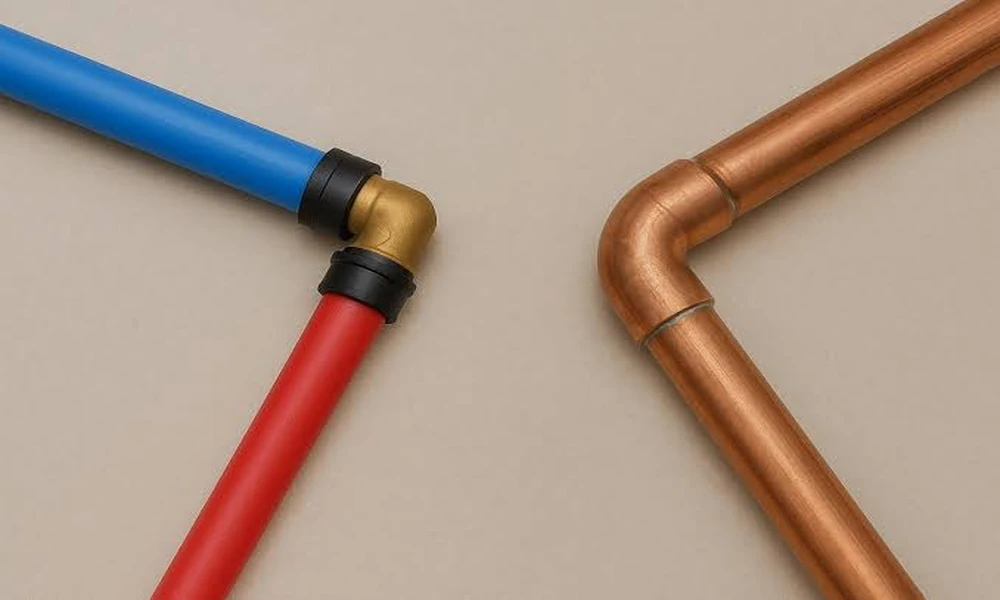
The plumber quoted you $14,000 for copper and $8,500 for PEX, and now you’re supposed to feel confident about picking one. Nobody hands you a decision rule at that moment.
So here it is: the right pipe depends on your water, your walls, and who’s insuring the place. Not on which material the guy with the truck prefers. This guide walks you through the tradeoffs the way I’d explain them to a neighbor over the fence, including the part where copper sometimes wins and the part where PEX wins easily. You’ll get a three-question test you can run before you sign anything, plus a few things to say out loud at the kitchen table when a quote shows up.
Plenty of homeowners end up weighing copper repiping solutions against PEX without ever hearing what separates them in practice, and that gap is where expensive mistakes live. What actually separates them is water chemistry, layout, and insurance paperwork, and those are boring enough that most quotes skip them.
Why does the pipe material matter more than the brand?
Because the material is the only part of the job that’s permanent. The crew, the warranty language, and the invoice all disappear from your life. The pipe in your wall stays until you sell the house or tear it open again.
Copper has been the standard since the mid-twentieth century. A properly installed copper system can last decades, and it’s rigid, so it holds up to pressure spikes and hot water cycles without much drama. It also handles chlorine and most municipal water profiles without complaint. The catch is price and labor. Every joint is soldered, and soldering takes time, so the bill climbs.
PEX is flexible tubing that’s been part of residential plumbing for a few decades now. It runs through joists and around corners with fewer fittings, which is where a lot of the cost savings come from. Fewer fittings also means fewer places to leak, which is the argument I’d make to anyone on the fence. One thing people rarely mention: PEX is easier to route through finished walls and tight crawlspaces, so a retrofit usually means less drywall repair.
My take, and I’ll own it: if your house has a slab foundation and your copper is buried in it, PEX in the attic is the smarter move almost every time. Digging up a slab to replace pipe is the kind of project that turns a repipe into a remodel.
The three-question test before you pick a material
Run this before you call anybody. It takes ten minutes and it’ll save you a bad decision.
- What’s in your water? Pull your water quality report. If it’s high in chloride or the pH is aggressive, copper is more vulnerable to internal pitting over the long haul.
- Where do the pipes run? Slab, basement, attic, or crawlspace. Slab copper is the worst case. Attic PEX is usually the cleanest retrofit.
- Who insures it? Call your carrier and ask, plainly, whether they write or discount policies on homes with either material. Some do, some don’t, and the answer can tip a close call.
That third question surprises people. It shouldn’t. Insurance carriers care about pipe failures because water damage claims are expensive, so their underwriting reflects it.
Water quality decides more than you’d think
Copper and PEX fail in different ways, and the water in your house picks which failure you’re likely to see.
Municipal treatment plants add disinfectants to keep water safe, and those chemicals can shift over time depending on the source and the season. According to the Environmental Protection Agency, water systems are required to publish quality reports for their customers, so that document is a free diagnostic sitting in your inbox. Read it before the plumber’s truck pulls up. If the report shows aggressive water, that’s a real argument for PEX or for copper installed with an eye toward corrosion resistance. It’s also an argument for a filter or a softener, which is cheaper than a repipe.
PEX has a reasonable track record inside normal water temperatures and pressure, but it isn’t immune to sunlight or to certain chemicals. If your line runs through an attic or near a boiler, ask about UV-rated tubing and heat limits before the crew staples anything down.
What a repipe actually costs you in life, not just money
The dollar figure is the part everyone focuses on, but the hidden costs are time, disruption, and cleanup.
A PEX repipe on a typical single-family home usually runs you a few days, with drywall patches limited to where lines come out of the wall. A copper job takes longer, because there’s more soldering and more fitting. If you’re living in the house, that difference shows up as dust in your coffee and a bathroom you can’t use for half a week. Budget for a night or two away if the crew needs to shut the water off for long stretches. I’ve seen people forget that line item and then get blindsided by a hotel bill they never planned for.
Copper has one advantage that’s worth naming: it’s recyclable and it holds resale value in a way PEX doesn’t. On a high-end listing, a buyer’s inspector who sees fresh copper will nod. Fresh PEX usually gets a shrug. Neither reaction changes how the water flows, but resale is real money, so weigh it.
The walk-through audit that keeps estimates honest
Before you accept any number, do your own walk-through and write down what you see. Contractors estimate from what they can spot, and you’re the one who lives there.
- Open every cabinet under every sink and look at the shutoff valves and the pipe where it comes through the wall. Note any green crust or white chalky buildup.
- Look under the water heater. Water pooling, corrosion on the fittings, or a pan with a crust line are all worth photographing.
- Walk the basement or crawlspace with a flashlight and note where the lines run and whether anything’s insulated or strapped to the joists.
- Turn on the shower and the kitchen sink at the same time. If the pressure drops hard, that’s a sizing problem, and a repipe can fix it.
- Count the fixtures. More fixtures means more tap and more cost, and you’ll want to know that before the quote arrives.
Take photos of everything and hand them to each contractor you call. It changes the conversation. They know you’ve looked, and the estimates get closer to reality.
Materials matter for the people doing the work, too. The Occupational Safety and Health Administration regulates soldering fumes and flux handling on job sites, so a crew that looks casual about ventilation or protective gear is a crew that’s cutting corners in other places. Look at how they handle their own safety and you’ll learn something about how they’ll handle your drywall.
Permits, inspections, and the paper trail
This is the least exciting section and the one that protects you most. A repipe is a permitted job in most jurisdictions, and the inspection is what stops a sloppy install from becoming your problem in three years. Ask each contractor whether permits are included in the quote. If they say the job doesn’t need one, get that in writing and then verify it yourself. A quick call to your local building department settles it.
Insurance companies treat permitted, inspected work differently from work that just appeared in the wall. When you sell, buyers ask. When you file a claim, adjusters ask. The paper trail matters. Along those lines, the Department of Housing and Urban Development maintains guidance on home inspections and property standards, so anyone buying or selling a home should know what an inspector will look for. The short version: documented work reduces friction in every transaction it touches.
The other piece of paperwork is the warranty. It should name the pipe, the labor, and the transfer terms, and it should live in the folder with your water report and the permit. If a contractor can’t articulate what happens if a fitting fails in year four, that’s a red flag the size of a crawlspace.
My verdict, if you want one
My verdict, unapologetically: PEX for retrofits and tight spaces, copper where the water is aggressive or resale polish matters. Copper looks and lasts like an heirloom. PEX is the practical answer for most homes with slab or attic runs. Neither is a magic wand, and the crew matters more than the material. Bad execution fails in both pipes.
One last thing worth knowing: homes in the same neighborhood tend to age on the same clock. If three houses on your block have repiped in the last two years, your turn is probably closer than you think. That’s not a sales tactic, it’s just how subdivisions get built.
So do the walk-through this weekend. Take the photos. Pull the water report. Call your insurance carrier and ask the question out loud. By the time the third estimate lands on your kitchen table, you’ll already know which number is the right one. Which pipe would you defend to your neighbors, and can you say why without quoting a sales brochure?
