

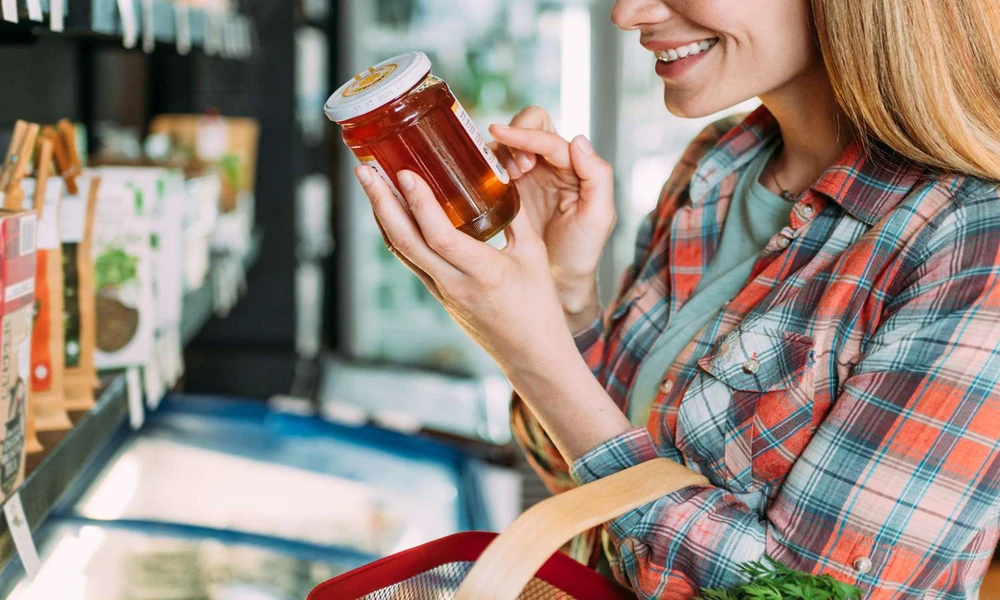
I once paid fourteen dollars for a jar that said “pure honey” in gold foil lettering. It tasted like pancake syrup that had been to a nice boarding school. The label told me nothing useful, and I bought it anyway because the font was pretty and I was in a hurry.
That jar taught me more than any food blog ever did. Honey labels are marketing documents first and information documents second, and the gap between those two jobs is where your money disappears. So here’s the short version: if the label doesn’t say raw, unfiltered, and where it came from, assume it went through heat and a fine mesh before it reached you.
The good stuff does exist, and it’s not hard to find once you know the three words that matter. Shoppers who want the real thing, straight from the comb with the pollen still in it, tend to end up somewhere like Sweet Bee Gardens Texas raw honey rather than the middle shelf at a big-box store, and that shift in where you shop does more for flavor than any label claim ever will.
So what does “pure honey” actually mean?
Almost nothing, legally speaking. Pure honey means the jar contains honey, as opposed to honey blended with corn syrup or flavored syrup, which is a real problem in global supply chains and one that federal regulators and customs officials have chased for years. According to the Food and Drug Administration, honey is defined by its composition, and a product that has been heavily diluted or adulterated can’t legally be sold as pure honey.
But the word says zero about processing. A jar can be labeled pure honey after being heated to high temperatures and pushed through filters fine enough to remove pollen. It’s still honey. It’s just honey with the interesting parts taken out.
Here’s what I tell friends who ask: treat “pure” as the minimum legal floor, not a quality badge. If that’s the only word on the front of the jar, flip it over and read the ingredients panel. Honey should be the only thing listed, and ideally the label names a region, a state, or a beekeeper.
The three words worth hunting for
Raw, unfiltered, and local. Those three carry actual weight, and each one tells you something different about what’s in the bottle.
Raw means the honey wasn’t pasteurized. Heat does useful things for shelf stability and clarity, but it also degrades the enzymes and aromatic compounds that give honey its character. A raw honey from a specific bloom tastes different from a raw honey fifty miles away, and that variation is the whole point.
Unfiltered means coarse straining only, which leaves trace pollen and fine wax in the jar. That’s why raw honey clouds, crystallizes, and sometimes looks like it’s gone bad when it hasn’t. Crystallization is a sign of real honey, not a defect.
Local is the one I’d rank first if I could only pick one. Honey from a beekeeper within a few hours of you reflects whatever your region bloomed that season, and it’s usually sold by people who can tell you the harvest month without checking a spreadsheet.
A quick label checklist you can use in the aisle
Run this in your head before you commit. It takes about twenty seconds and it has saved me from more bad jars than I can count.
- Ingredients list says honey and nothing else, no syrups, no flavoring, no “honey blend.”
- The words raw and unfiltered appear on the front, not buried in a web page.
- A harvest region or beekeeper name is printed somewhere on the jar.
- The honey is dark, cloudy, or already crystallizing rather than perfectly clear.
- There’s a batch or lot number, which means someone is tracking what went into the bottle.
If a jar passes four of those five, buy it. If it passes two, put it back and spend your money on something with a paper trail.
Why heat and filtration became standard practice
Food manufacturers didn’t start pasteurizing honey out of spite. Clear, shelf-stable honey ships better, sits on a warehouse pallet longer, and looks more uniform under fluorescent light. Those are real business pressures, and they explain why the default grocery jar looks the way it does.
The trade-off is that uniformity costs you flavor. A pasteurized, micro-filtered honey from a blend of sources in three countries tastes roughly the same every single time, which is exactly what a national brand wants and exactly what a curious eater doesn’t. The National Honey Board tracks the range of varietals produced domestically, and the differences between them are dramatic once processing stops flattening them out.
I’d rather have a jar that crystallizes in six weeks and tastes like a specific summer than one that looks like glass for two years. That’s a personal call, but I’ll defend it.
What about the health claims on the back?
Most of them are oversold. Honey is still sugar, and no label is going to change that. What raw honey does offer is trace pollen, enzymes, and a flavor profile you can’t fake, which is reason enough to choose it without dressing it up as medicine.
The USDA Agricultural Marketing Service runs the grading and inspection side of domestic agriculture, and its honey standards focus on things like moisture, color, and freedom from defects rather than health promises. That’s a useful reality check when a label starts hinting at miracles.
Buy raw honey because it tastes better and because you can trace it. Not because the back label promised you a longer life.
The farm stand rule
Here’s the framework I actually use, and I’ve never regretted it. I call it the farm stand rule: buy from whoever could plausibly hand you the jar in person and describe the season it came from.
That doesn’t mean you have to drive to a farm. Plenty of small apiaries sell online and still print a harvest region on the label. But the test filters out the giant blends, the mystery imports, and the jars where nobody involved has ever seen a hive.
Last fall I opened a jar from a Texas producer, and the first thing I noticed was how thick it poured. Slower than the grocery brand, with a faint citrus edge from whatever bloomed nearby. Two spoonfuls into a cup of tea and I understood why people get fussy about this stuff. The texture alone tells you someone didn’t rush it through a heat exchanger.
That’s the experience you’re shopping for, and it’s not on a nutrition panel. It’s in the pour.
Pick the jar with a story attached
Labels exist to sell, so read them like a skeptical customer rather than a hopeful one. Look for raw, unfiltered, and a place name. Check the ingredients panel for anything that isn’t honey. And don’t flinch when the honey crystallizes, because that’s the jar doing exactly what it should.
Everything else, the gold foil, the pastoral farm illustration, the word artisanal in a script font, is decoration. The good news is that once you know the three words, you stop paying for decoration and start paying for flavor.
Next time you’re standing in front of a shelf of identical-looking jars, try the farm stand rule. Which one could actually tell you where it came from?
