

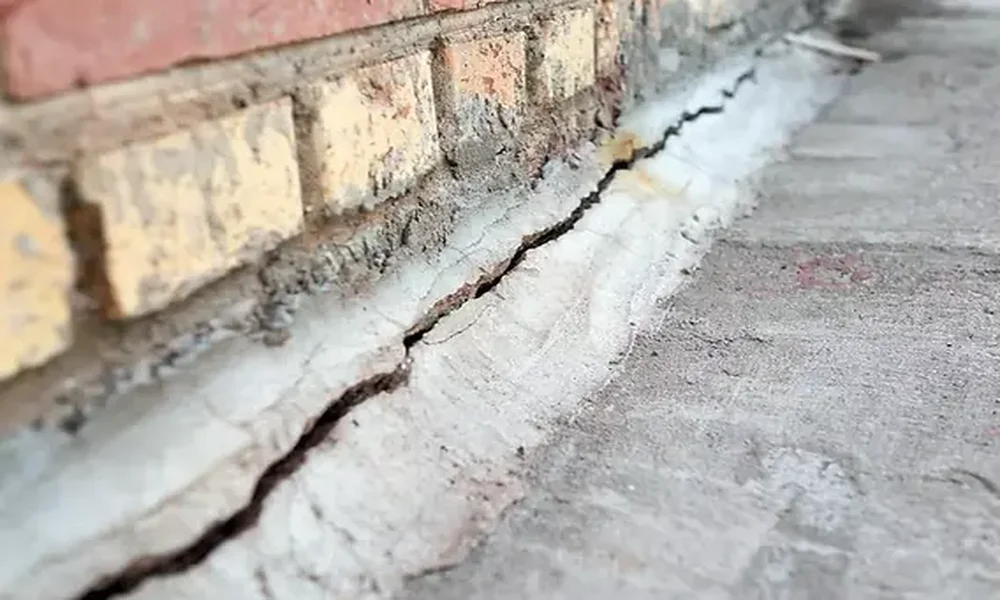
Two weeks ago a homeowner in Manoa showed me a hairline crack over her garage door. She had been meaning to get it looked at for a year. By the time a crew finally walked the property, that hairline had turned into a stair-step fracture wide enough to slide a quarter through, and the back corner of the slab had dropped nearly two inches. That drop did not happen overnight, and it almost never does. It happened slowly, invisibly, and for reasons that any trained eye could have flagged long before a single wall cracked.
Here is the promise of this guide: by the end, you’ll know which warning signs actually matter, which ones are cosmetic noise, how modern stabilization systems actually work, and the three moves you should make in the next thirty days if something feels off. Foundation problems are genuinely fixable. What is not fixable is the bill you rack up by waiting.
What Is Actually Happening Under Your House
Your foundation does not sit on one nice, uniform layer of stable dirt. It sits on whatever the ground happens to be, and in many parts of the country that ground is clay, fill soil, or a mix that behaves differently depending on how wet it gets. When soil absorbs water it swells. When it dries out it shrinks. Repeat that cycle for a few decades and the soil under one corner of your house may be doing something completely different than the soil under the other corner.
That differential movement is the whole ballgame. A crack in drywall is a symptom. The real story is differential settlement: one part of the structure is sinking or lifting faster than the rest, which torques everything above it. According to the Universal Design Studio data on expanding soils, clay-heavy regions across the country are among the most common culprits behind seasonal foundation movement. And no amount of patching drywall fixes a problem that lives eight feet below it.
I would take a slightly controversial position here: most homeowners worry about the wrong thing. They obsess over a crack in the paint and ignore a door that suddenly sticks for the first time in ten years. A sticking door means the frame has twisted, and frames do not twist for no reason.
Red Flags You Should Not Ignore
Run through this list. If two or more apply to your house, get a professional assessment sooner rather than later.
- Doors and windows that stick, jam, or will not latch when they used to work fine
- Stair-step cracks in brick or block walls, especially in a diagonal pattern
- Drywall cracks that reopen within a few months of being patched
- A floor that visibly slopes, or a marble that rolls without help
- Gaps around the exterior where the wall meets the foundation
- Standing water, poor drainage, or a downspout dumping right next to the slab
- Cracks wider than the thickness of a nickel
A single hairline crack in a twenty-year-old slab is normal. Concrete moves, concrete cracks. But widening, stair-stepping, or a cluster of new cracks appearing in the same season is a different animal entirely, and that is when you stop patching and start diagnosing.
Here is the part a lot of people get wrong: the fix is not to add more concrete. It is to stabilize the soil-structure system so movement stops, then decide whether the structure needs to be lifted back toward its original elevation. Those are two separate questions, and the honest answer sometimes is that simple drainage improvements solve most of it.
How Stabilization Systems Actually Work
Stabilization is the process of stopping the movement. It sounds abstract, so let me make it concrete with the three most common approaches and what each one is actually doing.
| System | What It Does | When It Fits |
|---|---|---|
| Underpinning | Transfers load to deeper, more stable soil layers | Significant settlement, structural concern |
| Compaction grouting | Densifies loose soil to increase load capacity | Loose or eroding fill soils |
| Slope stabilization | Holds sloped terrain in place against soil pressure | Hillside properties, retaining wall failure |
Underpinning is the heavy hitter. Crews drive or push supports down to a layer of soil that is not going anywhere, then lift the structure to relieve stress and close the gaps. If that seems aggressive, it is, but so is a house that keeps sinking. Compaction grouting is gentler: it injects grout into voids and soft spots to firm up the soil itself before anything structural gets touched. And slope work is its own discipline entirely, because if the hillside above your house is moving, no amount of work on the house alone will hold.
Done right, the sequence always starts on paper. Before anyone commits to a plan, an engineer or a trained contractor should be reading the site conditions and deciding which system fits, not bolting on whichever method is easiest to sell.
Why the Timeline Matters More Than the Damage
This is the part I would shout from a rooftop: foundation problems rarely stabilize on their own. They are usually progressive. Small settlement concentrates stress on a smaller area of the structure, which produces more settlement, which concentrates stress further. Left alone, that acceleration is why a problem that starts at $5,000 to $15,000 can quietly turn into a load-bearing nightmare.
Meanwhile, the house is doing its own damage. Plumbing lines crack when the slab moves, water gets into places water should never be, and a moisture problem in a crawl space turns into a rot problem. I have seen more homeowners regret waiting than regret acting early. Nearly always, the client who gets an assessment the month they first notice something walks away with a smaller scope than the client who lets it ride for two years.
Second, there is a permitting angle most people do not think about. Structural work of any real consequence needs engineering coordination, and the paperwork genuinely takes time. According to the Federal Emergency Management Agency, homes in seismically active or flood-prone areas face added structural risk factors that make early review especially important. That is not a scare tactic. It is a scheduling reality: if your repair needs a permit, you want to be in the queue before the busy season, not during it.
If you are comparing contractors, look for a firm that handles engineering coordination in-house rather than handing it off to whoever answers the phone. Structural Systems Inc building stabilization specialists take that approach by coordinating engineering, permitting, and field work under one roof, which is exactly the kind of setup you want when a schedule slip means another wet season of soil movement under your floor.
The First Three Things to Do
You do not need to solve this tonight. You need a plan. Here is the one I would give a friend.
1. Document what you can see.
Take dated photos of every crack, door frame, and floor transition you are worried about. Put a coin or a ruler next to the crack so scale is obvious. Twelve months from now, these photos are the only way to prove whether anything is getting worse, and proof is what drives an accurate scope.
2. Fix the water first.
Before any structural money is spent, address drainage. Check where your downspouts empty, whether the ground slopes away from the house, and whether gutters overflow during storms. Water is the most common accelerant for soil movement, and it is the cheapest variable to control. No structural repair on earth survives constant water intrusion.
3. Get a real assessment, in writing.
Ask for a written evaluation that says what the movement is doing, which stabilization approach fits, and how the price breaks down. Vague estimates and pressure to sign today are both reasons to get a second opinion. A quality contractor will not mind the question.
One more piece of practical advice: get the assessment done in the dry season if you can. Soils behave differently wet and dry, and a professional evaluating your site when the ground is at its most stable will want to know what it does when it is not.
Bottom Line
Foundation trouble is intimidating, but it is a problem with a real solution and a track record to prove it. The homeowners who come out ahead are not the ones with the worst damage or the most money. They are the ones who treated a sticking door and a hairline crack as the information it actually is, then acted on it while the fix stayed small.
Start with the photos. Check the drainage this weekend. Then call someone qualified and ask the hard questions. What has been wobbling in your house for a while now, and how long do you really want to wait to find out why?
